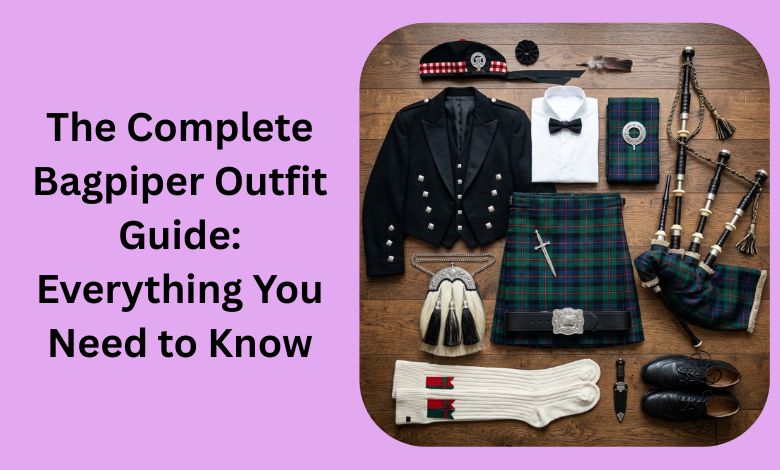
Bagpiping is not simply about the sound that bursts out of the pipes, the outfit is the other 50%. Anyone who’s ever been with a piper at a wedding or parade is familiar with the whole ensemble, and when you are standing next to the guy, it’s everything before the first little ditty plays out of his horn. However, there is more to it than just putting on a kilt and that’s it. When it comes to setting up a bagpiper outfit, there’s a dozen different little parts that go into making a proper outfit, and not getting all of them right will usually show.
Stylishness is not the only key to getting it right. Some of these pieces actually impact on your comfort while standing for 2+ hours in a parade, or moving while playing. It’s worth knowing what a piece of music does rather than looking at it, that is, its content.
Core Pieces of a Traditional Bagpiper Outfit
The Kilt
The kilt is obviously the centerpiece, and for pipers it’s usually tartan tied to a clan, regiment, or pipe band rather than just whatever pattern looks nice. Weight matters more here than for casual wearers ; an 8-yard kilt in heavier wool holds its pleats better and moves properly when marching, which a lighter, cheaper kilt just won’t do over a long set.
The Sporran
This is the pouch that hangs at the front, and it’s not optional ; a kilt without one looks unfinished, honestly. For performance, pipers usually go with a formal sporran (think horsehair or fur-trimmed) rather than the plainer leather ones used for everyday wear. It’s functional too — it’s where a lot of pipers stash reeds, a tuning key, whatever small gear they need on hand.
Jacket and Waistcoat
It is the ties of the jacket that tie the whole ensemble and give an indication as to how formal the event is. The Prince Charlie Jacket with a waistcoat, accessorized typically with a tie bow, is the most precise-looking of any among them, commonly worn at wedding or ceremonies. It is commonly replaced by a doublet, normally in the same color as the band’s uniform, for pipe bands. The point is it should be the first piece of clothing people notice, after the kilt.
Shirt
Underneath it all, a simple white dress shirt does the job for formal wear. For band performances or heavier work like parades, a lot of pipers switch to a more breathable shirt since standing in full regalia for hours in heat is no joke.
Essential Highland Accessories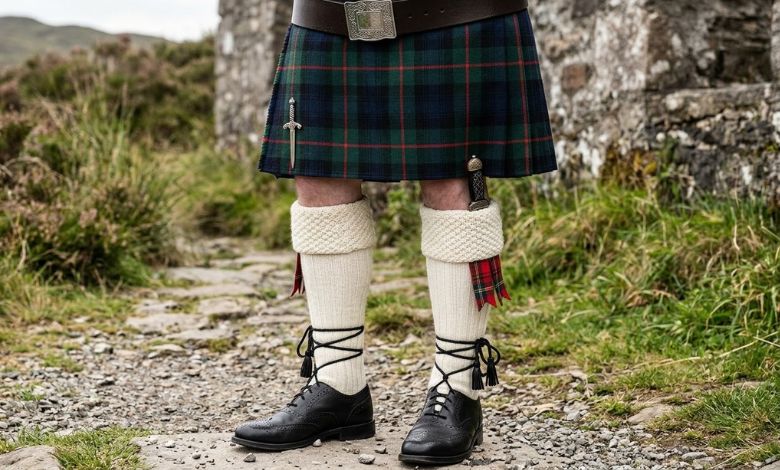
Kilt Hose and Flashes
Kilt Flashes are small pieces of tape to hold up kilt hose, which are long wool socks down to just below the knee, and are typically the same color as the tartan or a colour from it. Perhaps a minor inconvenience, ill-matched hose colour is one of those things that mar otherwise crisp attire.
Ghillie Brogues
These are the traditional lace-up shoes with no tongue, designed specifically so water drains out and long laces can wrap around the ankle. They look distinctly different from regular dress shoes, and honestly, regular shoes just don’t pair right with a kilt outfit at a formal level.
Kilt Pin and Belt
The kilt pin is used to hold the ‘kilt’ in place while the belt is used for holding them around the waist and is typically leather with a large buckle, and sometimes decorated with a clan crest. They’re both small items but are more than an accessory, they complete the look.
Sgian Dubh
That is the little knife in the top of the hose, usually not a weapon in use – it’s a part of Highland dress. One of those things you don’t ordinarily notice, but you certainly do if it’s not there, is it.
Traditional Headwear
Glengarry vs. Balmoral
The Glengarry is the sharper-looking, boat-shaped cap with ribbons hanging off the back common for pipe bands and semi-formal wear including Highlander Black Velvet Rosewood Bagpipe. The Balmoral is rounder, flatter, a bit more relaxed looking, and tends to show up more in casual or everyday Highland wear. Neither is “wrong,” it’s really about which look fits the occasion.
Feather Bonnet for Pipe Bands and Formal Events
This is the tall, dramatic headwear you see in full military-style pipe band uniforms for instance Scottish Bagpipes with Mackenzie Tartan. It’s not something most solo pipers wear day to day, it’s reserved for formal band performances and events where the whole uniform is meant to make an impact.
Pipes-Specific Gear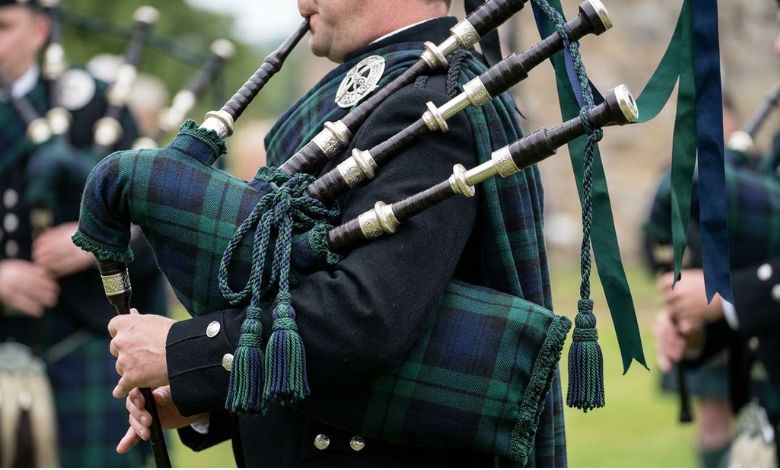
Pipe Bag Cover and Cord
The bag cover isn’t just decorative thus it protects the bag itself and usually matches the tartan of the rest of the outfit for a cohesive look. The cord that ties it off adds another small detail that ties into the overall color scheme.
Drone Ribbons
Those ribbons on the drones of the pipes are not as important as it’s mostly window-dressing, but the band is supposed to coordinate ribbon colors throughout the entire band so that everything will look uniform during the performance.
How to Put Together the Perfect Bagpiper Outfit
Everyday Practice vs. Formal Performance Outfit
For practice or casual playing, you really don’t need the full get-up where a kilt, decent shoes, and comfortable hose will do including Traditional Irish Green Tartan Bagpipes. It’s weddings, parades, and formal pipe band events where the full outfit, down to the sgian dubh and feather bonnet, actually gets used.
Matching Your Outfit to a Clan or Regiment (If Applicable)
If you’re playing for a specific pipe band or representing a clan, most of these choices — tartan, jacket style, even hose color — usually aren’t up to personal preference. It’s worth checking with the band or organization before buying anything, since replacing a wrongly colored piece after the fact gets expensive fast.
Why You Should Purchase Your Bagpiper Outfit from Scottish kilt Co.
A bagpiper’s outfit has too many moving parts to buy piecemeal from five different places and hope it all matches. Scottish Kilt Co. handles the whole range of kilts, jackets, sporrans, hose, the works which means the tartan and colors actually coordinate instead of looking slapped together from different suppliers.
They also understand the difference between a costume kilt and one that’s meant to be worn for hours of marching or playing. That shows in the weight of the wool, how the pleats are stitched, and how the accessories are built to actually hold up under real use, not just look good standing still.


