How to care for your kilt? This question is asked quite often on different platforms, while the query about caring tips for kilt accessories is also common, but people don’t speak over it. So, we decided to cover this topic, and we will talk about everything without kilts. Let’s begin by learning some basic maintenance tips for kilt accessories.
General Care Principles for Kilt Accessories
When we talk about some general upkeep tips, it does not mean that we are briefly talking about every accessory, but it is an overall discussion covering several topics, with some as given below.
- First of all, you must know the handling tips for all accessories, so there are no threats of damage.
- The next thing is understanding the caring requirements of all attributes, as different materials are used in their construction.
- Knowing the cleaning frequency is important as well.
- Users must learn about the environmental impact on these attachments; it will help them to know the suitable conditions.
- Last but not least, wearers should familiarize themselves with which accessories are home maintainable and which to take to an expert.
Kilt Accessories and Caring Tips
Now that you are familiar with some basic rules of caring for kilt accessories. Now assume that you have a kilt set in your hands that is used multiple times, and you need to care for them or clean them. Let’s start with kilt belts and buckles.
Tartan Kilts
Proper care of tartan kilts starts with gentle handling and regular polishing. Brush the fabric lightly, follow label washing instructions, and avoid excessive moisture or direct sunlight. Store the kilt in a breathable place, maintain pleats carefully, and seek professional cleaning to preserve shape, color, and durability.
Kilt Belts and Buckles
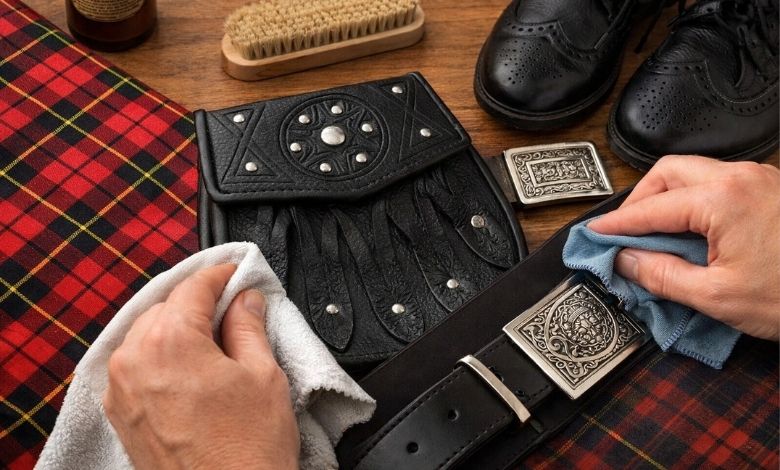
Kilt belts and buckles mean 2 distinctive materials: leather and metal. Both have unique cleaning and care requirements. A belt is made with pure leather, which cannot be washed but can be wiped with a clean but wet piece of cloth. Moreover, conditioning once or twice a year depending on its use. A buckle, on the other hand, is made with metal, and it should also be wiped with clean fabric. It may get tarnished over time, so use metal-specific solutions to remove it.
Sporrans
Caring for sporrans can be more difficult than for other accessories because they may have the most materials, including leather, metal, and fur. They have different variations, so let us see their caring tips separately.
Leather Sporrans: Leather sporrans are made with pure leather only, and they should be cleaned with soft brushing and conditioned after every 4-6 months.
Fur Sporrans: If we talk about the fur sporrans, they usually have fur or animal hair as important parts that need a lot of care. If you have this sporran, keep it away from moisture, sunlight, and heating equipment. Moreover, gently brush fur or hair with a soft-bristled brush to prevent breakage.
These sporrans also have cantles and metal fittings that have the same care requirements as that of buckles. Gently clean them using a soft cloth and remove tarnish using relevant products. However, you can also utilize home remedies like baking soda and lemon to remove tarnish.
Kilt Hose (Socks)
Kilt hose are usually made from wool or wool blends and should be washed according to label instructions. Hand washing or gentle machine cycles with mild detergent help maintain elasticity, shape, color, and overall fabric longevity.
Ghillie Brogues and Footwear Accessories
Ghillie brogues require regular cleaning with a soft brush or damp cloth. They leather also needs proper ventilation. Use leather conditioner occasionally to prevent cracking and maintain flexibility, and always store them in a dry, ventilated place to avoid moisture damage.
Kilt Pins and Brooches
Kilt pins and broochesare metal-made accessories that need proper care, like the cantles in sporrans. Like them, pins and brooches should be polished properly with relevant solutions. Moreover, wipe them away with soft and clean fabric before and after every use.
Sgian-dubh
A Scottish dagger, or Sgian-dubh, is an optional part of an outfit, and you should keep it clean as well for polished looks. First of all, prevent rust and damage. Keep the blade sharp and oiled with wax, while the wooden part should be conditioned for strength and shine.
Storage Solutions for Kilt Accessories
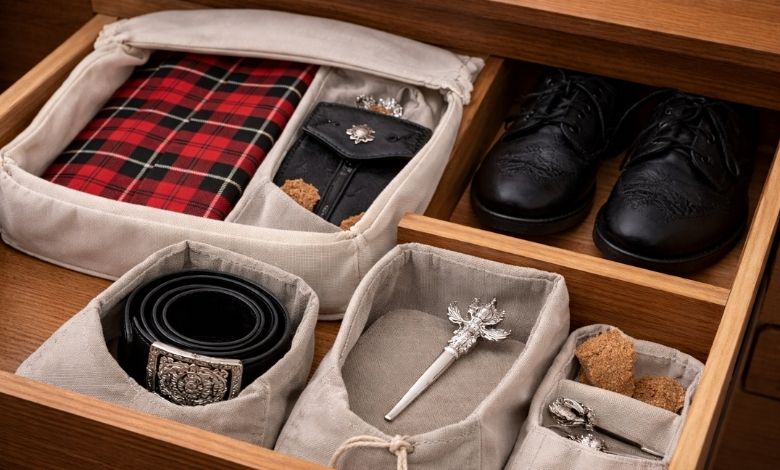
When it comes to the fresh looks of kilt accessories, ensure keeping them all clean. In the same manner, their accurate and proper storage is also the ideal way, and while storing them, make sure to keep them in a dry, breathable and hygienic place, where direct sunlight may not approach. The accessories that you need to store in bags should be kept in fabric bags instead of plastic, as the plastic may lack breathability. To prevent moisture, place cedar sachets in the bags.
Purchase High-Quality Kilt Accessories at Scottish Kilt Co.
The careful selection of stores to buy kilt accessories is as important as caring for them, because the quality decides how long they will last. Many stores offer exceptional services, but Scottish Kilt Co can be the ideal store, as high-quality accessories are available at cheap prices. Moreover, the repeated sales of our products tell customers that we have a zero return rate. Still, if any product is not damaged from our side, we offer the most convenient return and exchange policies.
FAQs About Kilt Accessories, Caring, and More