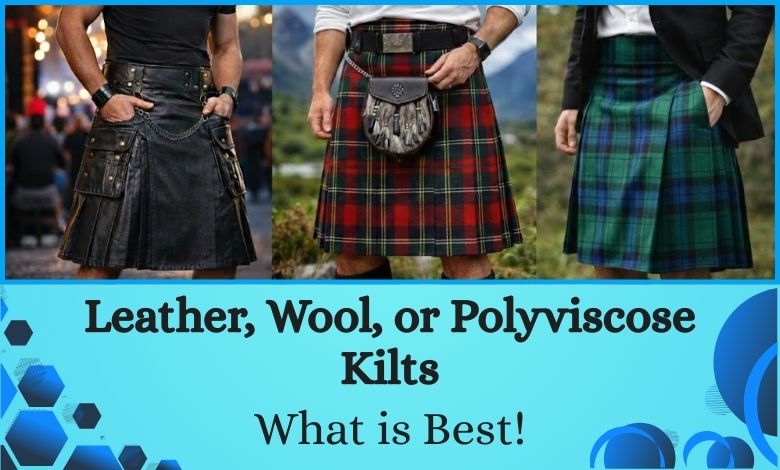
Tartan kilts have been worn for centuries and have gained global popularity. Over time they witnessed many changes in their designs and materials. Along with traditional kilts, modern alterations are also widely acceptable today. This discussion intends to compare kilts made with traditional wool, leather, and poly-viscose and help you find the ideal option.
Leather, Wool, or Polyviscose Kilts
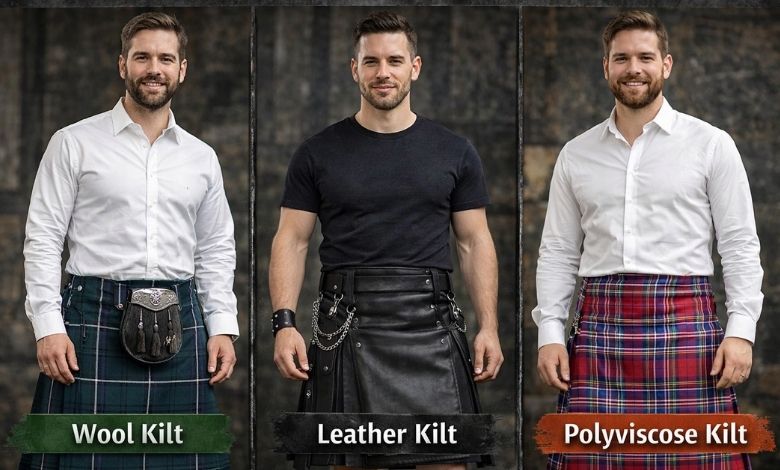
Before diving into leather, wool, or polyviscose kilts, let us have an overview on the different types of kilts. Kilts were “men’s kilts” for a longer time and became suitable for women and kids as well.
Over time, materials like leather, denim, and synthetics became popular alternatives for making kilts. This piece of information intends to discuss only three of them. Let’s find out their features, pros and cons, and even wear them.
Leather Kilts: The Modern Rebel
Leather kilts are made with leather and are a recent addition to the kilt’s family. Scottish Kilt Co proudly fabricates leather kilts with the highest quality of leather fabric which is called cowhide leather. Besides the material, they hugely differ from traditional kilts because of some features that tartan kilts lack. The only thing making them similar to woolen kilts is the traditional design overall. Otherwise, leather kilts have modern appearances with additional hardware such as pockets, chains, studs, and rings. Let’s have a look at their advantages and disadvantages.
Advantages of Leather Kilts
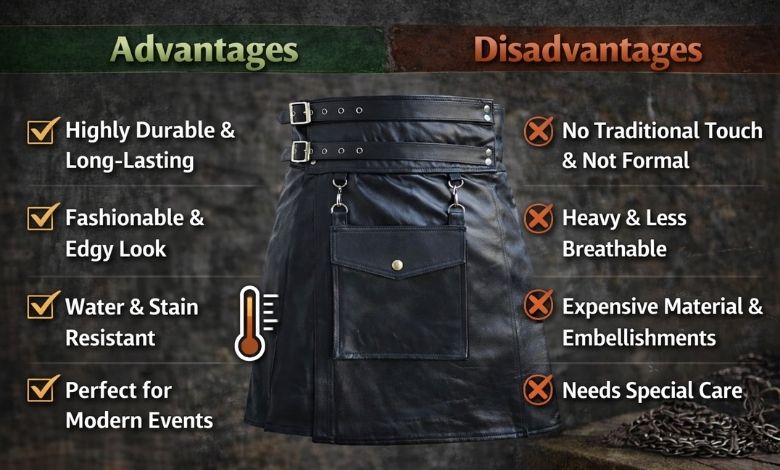
- Leather kilts are extremely durable and have a longer lifespan than other kilts.
- People often prefer wearing them because of their fashion-forward looks.
- Leather by nature has waterproofing features to a specific level, making it water and lighter stain resistant.
Disadvantages of Leather Kilts
- The first disadvantage is having no traditional touch and being unsuitable for formal settings.
- Leather is a heavier fabric, making kilts less breathable and inappropriate for the summer season.
- The leather itself is an expensive material, and the embellishments that leather kilts have increased their prices. In other words, everyone may not be able to afford to buy them.
Best Use Cases
We have already mentioned that leather kilts are not formal ones, and people love to wear them at fashion-forward events. Therefore, they can be unique options for semi-formal events.
| Semi-formal Business Meetings | Highland Games |
| Festivals | Musical Concerts |
| Ceilidh | Modern Events |
Wool Tartan Kilts: The Traditional Choice
Wool is the traditional fabric used to make tartan kilts. In fact, it is the first kilt-making material, as Highlanders find it ideal because of its warm and durable nature. Woolen kilts still have the traditional appearance, featuring pleats on the back and an apron on the front. Above all, their style connects people to the origin of kilts. They offer many pros and cons to the contemporary wearers that are discussed below.
Pros of Woolen Kilts
- Woolen tartan kilts are the authentic ones for a cultural flair.
- Wool is naturally warm, durable, and breathable, and these features were the basic grounds behind using it in the harsh environments of the Highland.
- The lightweight, draped, and pleated woolen kilts offer excellent drape and maximum ease of mobility to wearers.
- Tartan or woolen kilts are available in a wide variety, providing wearers with maximum choices to opt for.
Cons of Woolen Kilts
- The original animal-derived wool can be more expensive than other materials.
- Woolen kilts are often difficult to care for, as they are non-washable, requiring dry cleaning.
- As they are naturally warmer than cotton and other fabrics, they might not be ideal for summer wear.
Ideal Events to Wear Woolen Kilts
Woolen kilts with clan patterns are often worn formally. Therefore, universal kilts can be considerable choices for casual events.
| Weddings | Black-Tie Events |
| Highland Games | Cultural Festivals |
| Formal Dinners and Galas | Graduation Ceremonies |
Poly-viscose Kilts: The Budget-Friendly Option
The final kilt-making material on our list today is poly-viscose, which is a combination of two ingredients: polyester and viscose. Aesthetically, it resembles wool but is the synthetic form lacking the features of original material. Overviewing the positive and negative aspects of it will help you understand how it differs from wool.
Positive Aspects of Poly-viscose Kilts
- A major plus point is being economical, as compared to wool.
- Poly-viscose is pretty easy to maintain.
- Kilts made with polyviscose are lightweight and more comfortable.
Negative Aspects of Poly-Viscose Kilts
- Regarding the negative aspects, poly-viscose lacks the flair of authenticity, as it is an artificial material.
- The viscose components are usually weaker and do not perform well in sunlight and exposure to the environment. As a result, poly-viscose has a shorter lifespan.
- As the poly-viscose kilts have the same appearance as tartan kilts, they do not have a premium feel.
Ideal Occasion to Rock On Poly-viscose Kilts
Poly-viscose kilts are an affordable alternative to woolen kilts but are more versatile and can be worn at both formal and semi-formal settings.
| Highland Games | Scottish Heritage Festivals |
| Music and Dancing Events | Formal Events (daytime) |
Comparison Table
| Features | Wool Kilts | Leather Kilts | Poly-viscose Kilts |
| Material | Natural wool | Real Leather | Synthetic Material |
| Look and Feel | Traditional & authentic | Modern & edgy | Similar to wool, but less rich |
| Comfort | Warm, breathable, good movement | Heavy, less breathable | Light, Comfy |
| Care | Needs dry cleaning | Needs special care | Easy to wash and maintain |
| Price | Expensive | Very expensive | Budget-friendly |
| Best For | Formal/traditional events | Fashion-forward or semi-formal events | Everyday wear or mixed events |
Final Verdict: Which Kilt Is Best?
Now that you are familiar with the different traits of leather, wool, and polyviscose kilts, making a decision must have become easier for you. If you still want an opinion, we recommend you check the event’s formality and your requirements first. Traditional woolen kilts are excellent options for formal and semi-formal settings, as they fulfill dress code needs.
Leather kilts have a close link with fashion and perform best in modern events. Therefore, do not keep the weather conditions aside because they are less breathable and heavy in weight. Poly-viscose, on the other hand, is an option for every season but lacks the original touch.
Where to Buy Scottish Kilts
When it comes to buying the Scottish kilts made with genuine materials such as wool and leather, approach Scottish Kilt Co. We are an online store, serving Scots with traditional and modern kilts and their accessories. All products at our stores are handmade and available at affordable prices, and we deliver them to your doorstep. Visit our store right now and find an authentic kilt for the next event.
FAQs About Tartan, Leather, and Poly-viscose Kilts