The kilt pin is an essential part of a kilt for many, and is an accessory that would go a long way toward making a kilt outfit complete. While some people like to see it as a decorative item, a kilt pin has its use of being practical and stylish. The addition of weight to the front of the kilt to keep it from sliding up and down, while it also adds to the traditional Highland look.
There are several types of kilt pins, knowing when to use them and where, and knowing how to use and store them properly can enhance your outfit and appearance when wearing the kilt for various events such as marriage, formal occasions, Highland games and everyday wear. Simple and practical explanation of kilt pins.
What Is a Kilt Pin?
Purpose of a kilt pin
The kilt pin is a decorative piece of metal which is fastened to the outer front of the kilt. It was traditionally so, to heavier the fabric to ensure that the kilt would not fly in strong winds. It also took on connotations of personal style and Scottish identity over time.
Some people think that the kilt is secured by the kilt pin. Its primary task is not to secure the garment but it is mainly to enhance balance and aesthetics of the garment.
Historical background
With the right kilt pin, you can grace your attire with an elegant touch, drawing attention to the modern prints or styles you’re wearing. With a thoughtful and well-chosen kilt pin, you can effortlessly elevate your outfit and add a touch of elegance and personality without overwhelming it.
Kilt pins used to be in vogue to wear in their Highland military style and traditional Scottish attire. Today they can be found in such a variety of styles that the wearer will aptly select one of traditional style, modern or personalized style, depending on the occasion.
Types of Kilt Pins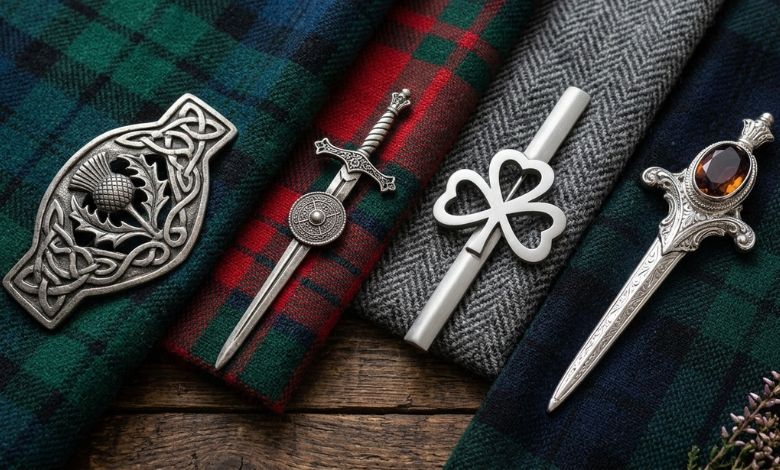
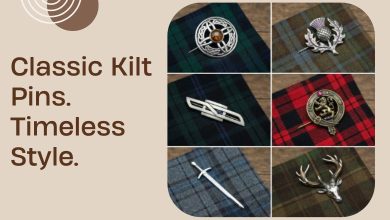
Traditional Celtic Kilt Pins
Among the most common kilt pin designs for traditional Highland attire are the traditional Celtic kilt pins such as Handcrafted Celtic Scottish Kilt Pin. These pins will sometimes include Celtic knotwork, clan symbolism or various historical Scottish symbols. They look great with tartan kilts and blend harmoniously with festive attire to deliver a long-lasting look ideal for weddings, ceremonies, and cultural events.
Sword Kilt Pins
One of the most representative is the sword-shaped kilt pins such as Celtic Shield Sword Kilt Pin. The pins are inspired by traditional Scottish weapons to represent strength, honour and tradition. The elegant shape helps to make classic tartan ensembles and Prince Charlie jackets look attractive.
Modern Decorative Pins
Modern decorative pins are great for modern decor, those who prefer that. They can be simple designs, symbols, geometric forms, monograms or engraving such as Shamrock Kilt Pin. They’re perfect for fashion-conscious men sporting the kilt who are looking for something that’s unique but still has the Scottish essence.
Gemstone Kilt Pins
Some Kilt pins have gemstones or engraved detailing that gives a classy edge to the Kilt pin. This is generally worn on formal events, like marriage, or luxurious luncheons. This can make the outfit look more sophisticated and stand out if the right high-quality jewelry piece is carefully picked.
Kilt Pin Placement Rules
Correct positioning
Whether you’re just starting your kilt or you’ve been wearing it for a while, knowing how to place your two-part kilt pin is crucial. It can be uncomfortable or look bad if used incorrectly.
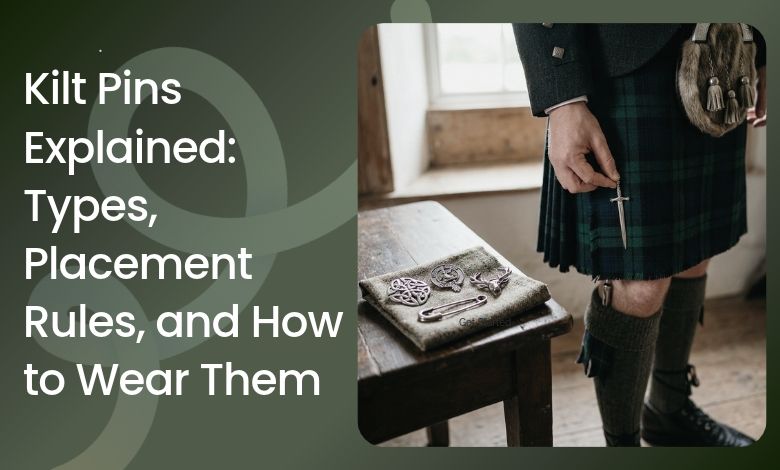
The kilt pin is always fastened to the lower right hand corner of the front apron. It is usually 2-3 inches up from the bottom hem and slightly in from the border. This helps with drape and balance of fabric.
Important rule (do not pin through both layers)
A novice error is pining the entire kilt, through both layers. A pin should push through the outside apron, but not the inside. If both layers are pinned together then yes it can affect freedom of movement and natural swing, which in turn, can impact on how the kilt is worn when walking.
Alignment tips
The aesthetic consideration of positioning is also important. A pin that protrudes too far above the paper can be unappealing, and a pin too far down can not perform as needed. To maintain a professional appearance, keeping it neat and aligned is important.
How to Wear a Kilt Pin Properly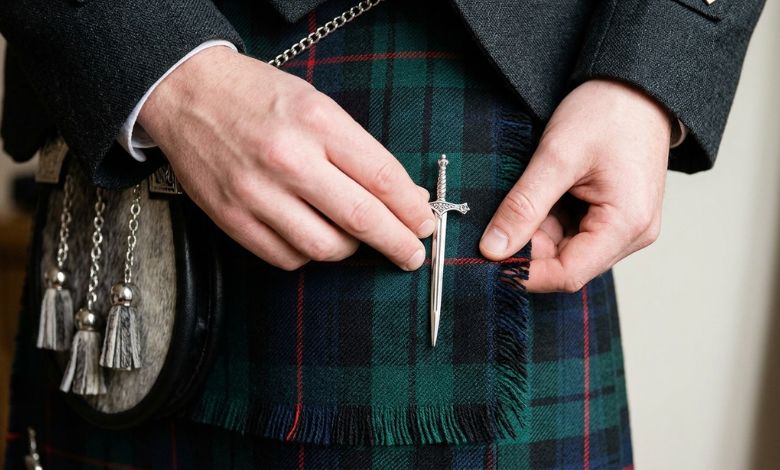
Here are a few tips on putting on your kilt pin.
Putting on a kilt pin properly isn’t all about getting it on the clothes. First make sure you are comfortable in your kilt before fitting the pin. This standard provides for accurate positioning.
You should also make sure that this fits with the other kilt accessories. For instance, Silver color pins are suitable with the Silver colored belt buckle, cufflink chains and sporran chains. Balanced and refined outfit by coordinating metals.
You should make the choice, as said, based on the occasion at the same time. For a wedding or formal event, a traditional sword pin might be the perfect choice, whereas a more understated look could be appropriate for a casual setting.
Use smaller or lighter pins for lighter materials and for overly large ones since they pull the material in an awkward way which will likely diminish the comfort level.
Common Mistakes to Avoid
First time kilt wearers often commit small actual mistakes that can impact on the overall look of the outfit. The most popular problems include wearing the pin too high or having the pin attached on both layers.
Another error is not selecting a tie in with the other Highland attire. Be mindful of the fact that a very contemporary style may not fit with a formal traditional kilt outfit. Similarly, a too fancy pin might not be suitable for everyday use.
Balance is key. The kilt pin should complement your outfit, not overpower it.
Why You Should Purchase from Scottish Kilt Shop
Quality is important when it comes to accessorizing for Highland. Opting for a trusted retailer can guarantee the quality of style, authenticity, and durability. Our Kilts Shop has an extensive range of Kilt Pins from traditional pocket pins to contemporary braid, all available for every occasion.
They come in all sorts of Celtic designs, beautiful traditional sword pins, and nice modern styles that will look great with tartan kilts. Established in the fine art of manufacturing and having meticulously made accessories, customers will also find top-notch craftsmanship and carefully designed accessories that will compliment the Highland experience.
Conclusion
The number of shoppers that like them is because of their attention to detail and variety. With a dedicated kilt retailer, since you can simply join your kilt trousers, you can pick the ideal adornments, whether you are for an official Scottish wedding or wishing to enhance your kilt involvement for the Highland activities.
While it might appear to be a trivial piece of attire, there’s a crucial part that a kilt pin plays in style and function. Whether you’re interested in the classic Celtic style or opt for something more contemporary, there are plenty of options to choose from, making it easy to find the right shape with a touch of charm for every personality.
The right Rules and Wearing of your Kilt, will help you make sure that it is not only properly displayed but is also comfortable and worn correctly! Choosing an appropriate kilt pin and making smart pairing with the outfit can definitely provide you a full Highland appearance which sounds believable and chic.