Tartans have become synonymous with Celtic culture and heritage, a legacy of centuries of tradition, skill and identity. Although Scotland is a famous place for having an abundance of tarts, Ireland has also evolved its very own unique tarts celebrating in counties, families, as well as country identity.Many people think that Irish and Scottish are synonymous, but there are a few differences between them and Irish.
Knowing the meaning and significance behind these patterns could help you select a line, or mix together a line to represent your interests in Celtic heritage or Celtic culture.
Understanding Irish and Scottish Tartans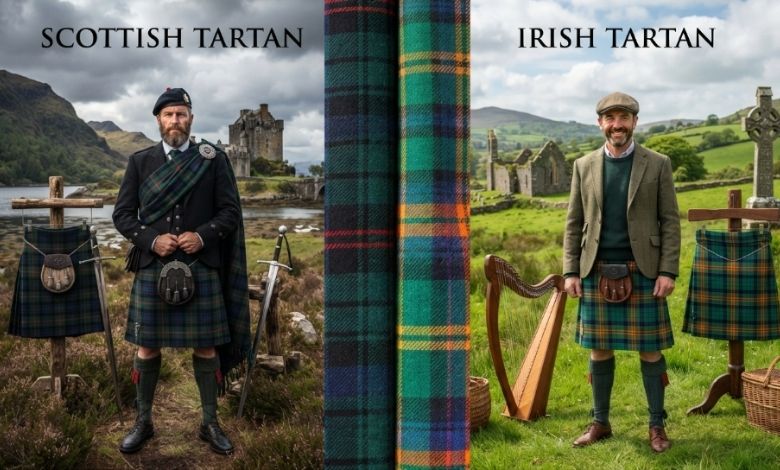
What Is a Scottish Tartan?
Scottish Tartans belong to Celtic culture and heritage which is a legacy of centuries of tradition, skill and identity. Hence a Scottish tartan represents the clan through a specific pattern in it. Although Scotland is a famous place for having an abundance of tarts, Ireland has also evolved its very own unique tarts celebrating in counties, families, as well as country identity.
What Is an Irish Tartan?
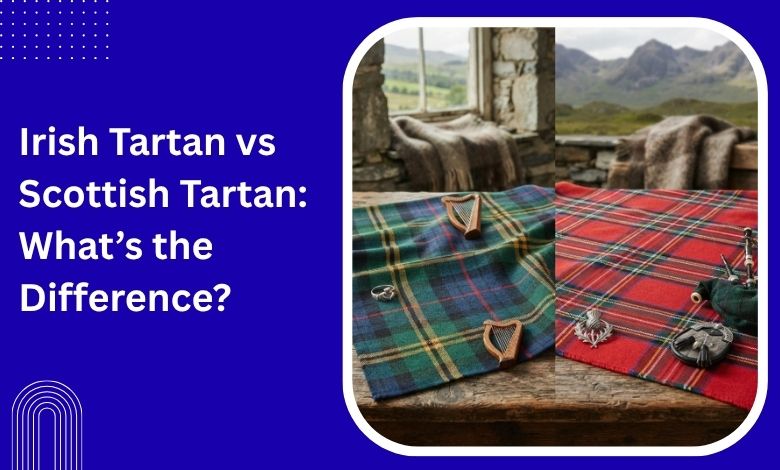
The structure of the weaving of the Irish tartans is the same as that of the Scottish tartans, but they are of differing historical origin. Generally, Irish Tartans are not associated with the clans, but are associated with the counties, provinces, surnames or national heritage. There are a few family tartans but county tartans are popular ones among those desiring a representative from the county of their ancestors’ origin.
Many Irish tarns are also branded with colors suggested by the scenery, background and exclusive symbols of Ireland, which reflects Irish cultural values.
Irish Tartan vs. Scottish Tartan: Key Differences
History and Cultural Significance
Scottish tartans are spread across over several centuries in age and were firmly entrenched in the culture of the Highland clans. Although at times, Highland dress was banned, the tartans continued; and the resurgence of it was significant in the nineteenth century. These are still the national symbol of Scotland today including Green Irish Tartan Kilt.
Irish tartans are relatively new. Many of these were crafted in the 20th century as interest in informed and awareness of Irish identity grew. While Ireland has a tradition of being able to design and weave their own tartans, their use as county and family symbols was much more restricted and occurred much later than in Scotland.
Clan Associations vs. County and Family Tartans
Perhaps one of the most obvious differences is that of what the different tarts are used to represent. Tartans are mostly associated with clans, and many families wear one even if their clan doesn’t exist. The district and Universal tartans also exist but clan connections are at the heart of Scottish tartan.
There are more Irish tarns that are associated with counties, to provinces, or to family names. It is possible that one could wear a pattern from a specific county, such as Kerry or Cork, rather than a pattern from a specific family or clan.
Colors, Patterns, and Design
Woven stripes are used to form distinctive set patterns with Irish and Scottish tartans, but can vary in colour. Tartans that are Scottish will frequently feature a diverse range of vibrant hues, which have evolved over centuries of custom and regional differences.
Green, blue, gold, and black are common colors found in Irish clothing, as these colors are inspired by Ireland’s natural scenery and significance. The rules are not absolute, but there is a preference to avoid obtrusive and loud colors with many Irish tartans being sifted in the lighter and more muted style.
Choosing Between Irish and Scottish Tartans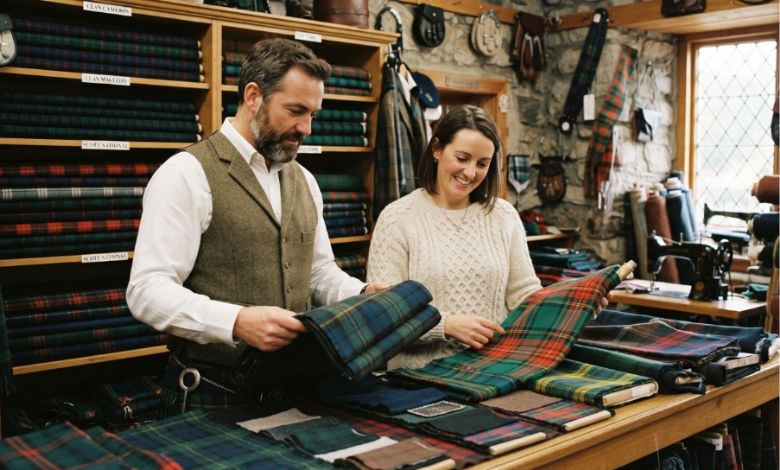
Selecting a Tartan Based on Heritage
If you are a descendant of Scots, it’s great if you choose a family clan tartan! Similarly if people are Irish, they select a tartan or county based on its name, which might refer to their parents such as Scottish Lindsay Tartan Kilt
It can help you find your family’s “personal” tartans to wear when wearing Highland wear, if you research your family history.
Wearing Tartans Without Family or Regional Connections
Not all people are descended from a specific family and many people just like the design of the tartan pattern. Fortunately, there are many universal, fashionable and commemorative tartans that can be worn by anybody, without referencing their heritage.
Great respect is paid even to the traditional clan or county tartans. There’s a considerable Highland body of acceptance when it comes to selecting a consignment of tartan, for those who truly value its design and history.
Common Misconceptions About Irish and Scottish Tartans
Are Irish Tartans Older Than Scottish Tartans?
No. In Ireland the craft of weaving and textile production is as old as the practiced arts, although clubs were not formally linked to the Clan in Scotland as early as they were in Ireland. Most of the Irish county and family tartans are of the latter sort and were designed during the Twentieth Century making them much newer than many of the traditional Scottish tartans.
Such is not a diminishment of their cultural value but only a variation from history.
Can Anyone Wear Either Tartan?
Yes. Many people enjoy wearing a ‘family’ tartan, but there is generally nothing wrong with wearing a tartan just because they like the look or it is of cultural interest. Tartans are designed for universal wear – particularly for anyone.
There is a necessity to learn and respect the history of Irish and Scottish tartans, which would help to enhance the authenticity and appreciation of the tradition when wearing them.
Why Buy Irish and Scottish Tartan Kilts from Scottish Kilt Shop?
Color, design, texture, and quality are as crucial as the fabric’s pattern itself. Scottish Kilt Shop has a vast array of authentic Irish and Scottish kilted clothes from quality fabrics designed and hand-tailored according to the traditional Highland style.
Tease out a clan tartan, an Irish county tartan or look for something universal and find the variety of styles, custom sizes and Highland accessories to complement your outfit. Quality craftsmanship and customer service see to it that your kilt will take place in your wardrobe for a number of years to come.
Conclusion
There are similarities across Irish and Scottish tartans but each are unique to a different cultural tradition. Scottish tartans will have a very close connection to the clans and the roots of the Highlands, whereas the Irish are more apt to represent a Province, County or a family name. Both primarily display a Celtic identity via unique woven designs that are still worn today around the world.
Understanding what constitutes a sense of pride and appreciation in wearing the tartan. It’s supposed to be right for you for one of the reasons outlined above, as it is associated with your ancestry, your personal style or you get fascinated by the history of the Celtic culture.